
Bhutan is a small Himalayan kingdom between India and Tibet. Prayer flags line the passes, fortress-monasteries guard the river valleys, and the country measures its progress by Gross National Happiness rather than by GDP alone. More than half of the land is forest, and it remains one of very few countries in the world that absorbs more carbon than it produces.
If Bhutan is on your list, this guide covers what first-time visitors most often ask us: when to come, how to get here, what it costs and how to make the most of your days.
When is the best time to visit Bhutan?
- Spring (March to May): rhododendrons bloom on the mountain passes, the weather is mild and the Paro Tshechu festival usually falls in this season.
- Autumn (September to November): clear skies, wide Himalayan views and the Thimphu Tshechu. This is the most popular time to visit, so book early.
- Winter (December to February): crisp, sunny days in the western valleys, fewer visitors, and black-necked cranes wintering in the Phobjikha Valley.
- Summer (June to August): the monsoon months. The valleys are lush and green, the trails are quiet, and the Haa Summer Festival brings nomadic culture to life.
How to get to Bhutan
Most visitors fly into Paro International Airport, one of the most dramatic landings in the world, on Drukair or Bhutan Airlines. Flights connect through cities such as Delhi, Kolkata, Kathmandu, Bangkok and Singapore. On a clear day, the flight from Kathmandu passes close to Mount Everest and other high Himalayan peaks.
You can also enter overland through Phuentsholing on the Indian border, which pairs well with a trip through West Bengal or Sikkim.
Visas and the Sustainable Development Fee
All visitors except Indian, Bangladeshi and Maldivian nationals need a visa, which is arranged online before travel. Bhutan also charges a daily Sustainable Development Fee (SDF), which funds free healthcare and education, conservation and carbon-neutral development. The fee and its discounts are set by the government and change from time to time, so check the current rates on the official Visit Bhutan website. We confirm the latest figures with every quote.
Places you should not miss
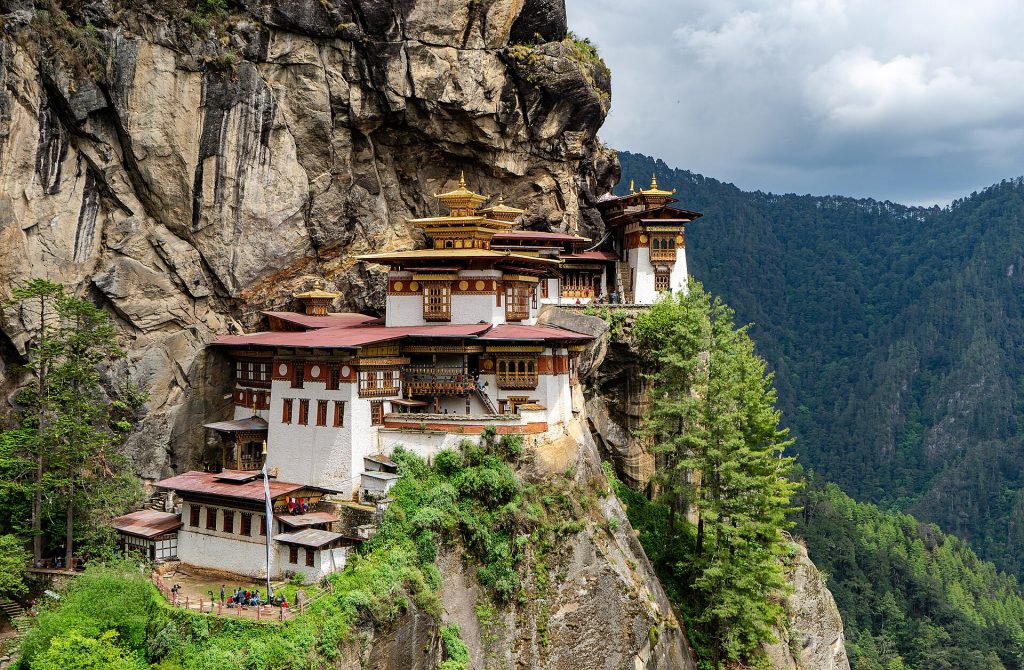
- Paro Taktsang (Tiger’s Nest): a monastery clinging to a cliff 900 metres above the Paro Valley. The hike takes four to six hours return and is worth every step.
- Punakha Dzong: the most beautiful of Bhutan’s fortresses, at the meeting of two rivers and spectacular in spring when the jacarandas bloom.
- Dochula Pass: 108 memorial chortens and, on clear days, a panorama of snow peaks.
- Phobjikha Valley: a wide glacial valley, home to Gangtey Monastery and the black-necked cranes in winter.
- Bumthang: the spiritual heartland, with some of the oldest temples in the country.
See all 47 places on our Destinations page.
Experience a Tshechu festival
Tshechus are religious festivals held in dzongs and temples across the country. Monks and laymen perform masked dances (cham) that tell stories of Guru Rinpoche, and families come dressed in their finest gho and kira. Festival dates follow the Bhutanese lunar calendar, so they move each year. Our festival tour packages are built around them.
Travel tips and etiquette
- Wear long sleeves and long trousers or skirts when visiting dzongs and temples, and remove hats inside.
- Walk clockwise around chortens, prayer wheels and temples.
- Ask before photographing people, and do not take photos inside temples.
- The local currency is the ngultrum, which is pegged to the Indian rupee. Carry some cash, because cards are not accepted everywhere outside the main towns.
- The sale of tobacco is tightly restricted, so smokers should check the rules before they travel.
- Bring layers: the days can be warm and the nights cold, especially at higher altitude.
- Try ema datshi, Bhutan’s much-loved dish of chillies and cheese, and a cup of salty butter tea.
Plan your journey with Gu-Mar Travels & Tours
We are a local team, and we design every itinerary around what inspires you: festivals, hiking, culture, wellness or simply a slow journey through the valleys. Browse our tour packages, or tell us your dates and we will put together a plan for you. Kuzuzangpo la, and we hope to welcome you to Bhutan soon.